

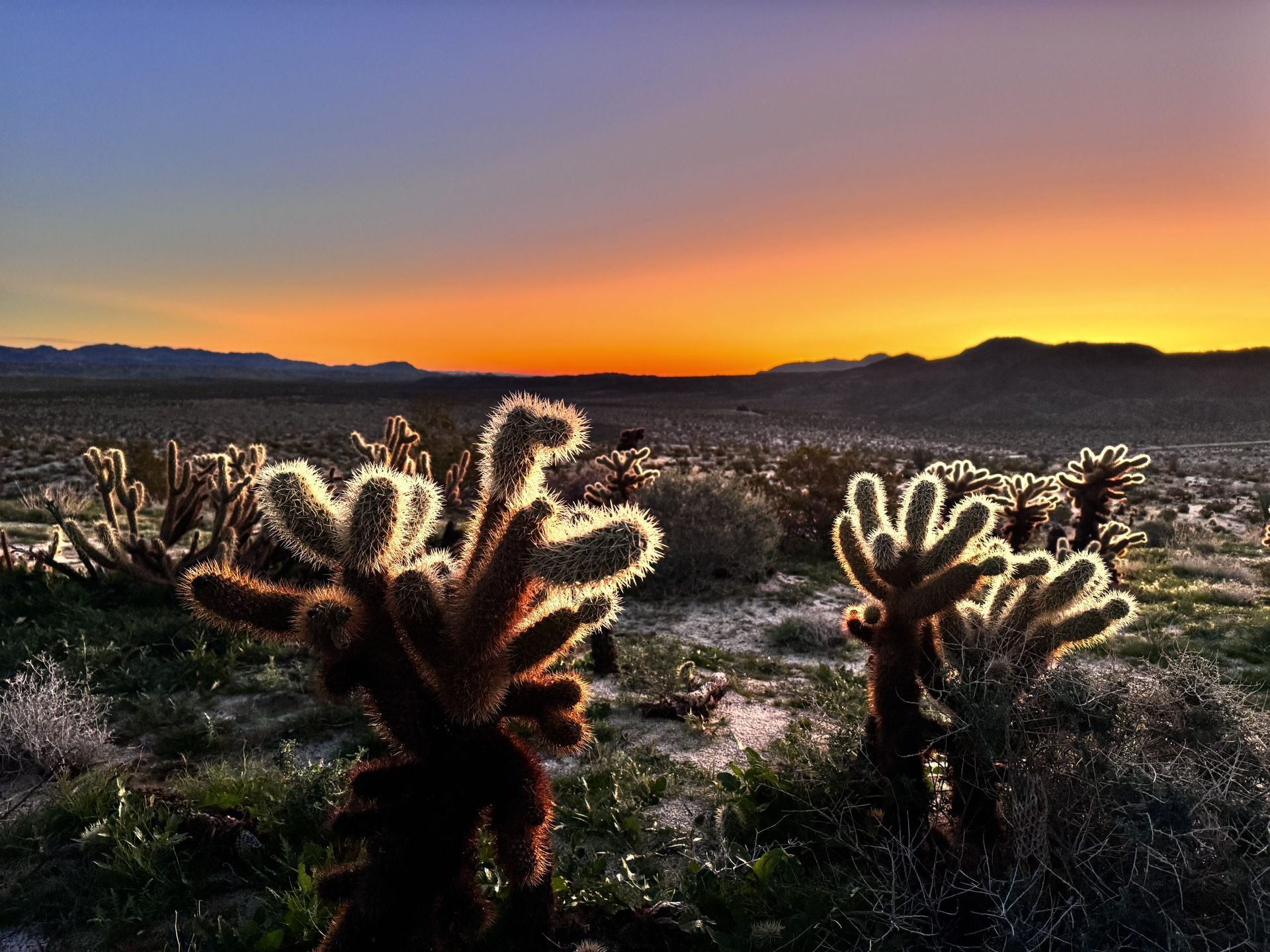
Every seventh week, from Tuesday through Thursday, Naomi and I find ourselves walking a familiar path—one paved with ancient songs, whispered prayers, and the quiet joy of recognition. The Psalms of Ascent—Psalm 120 through 134—rise up in our Daily Office readings like old friends returning for a visit. And we welcome them with open hearts. These fifteen psalms, traditionally sung by pilgrims journeying to Jerusalem, carry the cadence of movement and longing. They speak of valleys and hills, of danger and deliverance, of community and solitude. Historically, they were likely chanted as travelers ascended toward the Temple, each step a prayer. In the rhythm of the Daily Lectionary, we read the entire book of Psalms every seven weeks. That means each psalm becomes a companion we meet again. Some are challenging, others comforting. But the Psalms of Ascent? They’re ones we look forward to. They’re the ones that feel like a warm jacket on a cool desert morning. There’s something way cool about reading scripture this way—systematically, repetitively, relationally. Over time, verses become familiar not just because we’ve memorized them, but because they’ve memorized us. They know our seasons. They’ve seen us through grief and celebration. And when they return, it’s not just reading, it’s a reunion. So, when Tuesday rolls around in that seventh week, Naomi and I smile. We know what’s coming. We know who’s coming. And we say, “Welcome back, old friend. Let’s enjoy our time together.” I will close with a Psalm of Ascent (Psalm 122) beginning in Hebrew but ending in English. Enjoy. Blessings on your day, Father Dave Madsen
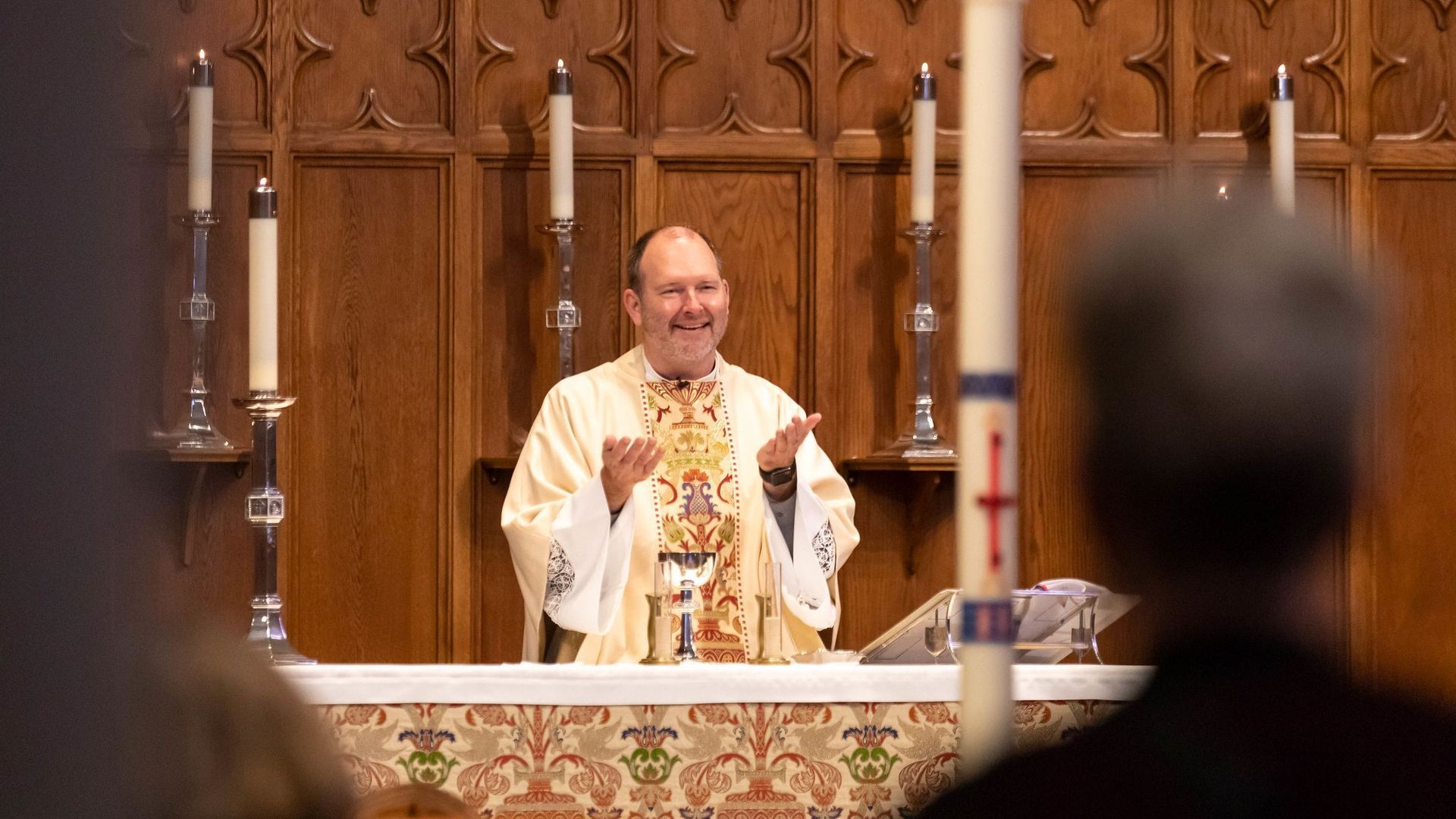
Dear Friends in Christ, The Rev. Canon Jeff Martinhauk is a beloved friend, colleague, and team member here at the diocese. It saddens me greatly to announce that he will be entering medical retirement at the end of February, 2027. Please see his letter below explaining more about his decision to retire. Since Jeff came to work here as our diocesan Chief Financial Officer in 2021, he has been a visionary, steady, faithful guiding influence for growth and financial wellness across our diocese and congregations. Many of you have experienced his patient and calm counsel as he walked you through complex financial, property, or HR situations in your congregations. Diocesan staff, governance committees, and I have relied greatly on his wise and gracious advice. Jeff is devoted to the mission of our diocese. He understands our vision and has been an invaluable partner in our ministry and in creating the strategic plan that is now unfolding. Jeff’s portfolio includes the finances, investments, accounting, human resources, and benefits administration of the diocese, as well as our oversight of property matters in all our congregations. He is also the executive team member responsible for our Mission Real Estate work, which is spearheaded by Jessica Ripper. Jeff has been instrumental in bringing our diocese to a solid and reliable financial footing. He is a true and trusted partner whose kindness, gentle good humor, and careful wisdom is respected and appreciated across our diocese. He is well beloved in his current congregation of St. Andrew’s Pacific Beach, and at St. Paul’s Cathedral, where he served as an associate priest for five years before joining our diocesan staff. Most of all, Jeff is a faithful Christian who has devoted himself to the well-being of the Episcopal Church, our diocese, and our congregations. Our hearts are full as we prepare for Jeff to step down. We will launch a search for his successor soon, and hope to have a new CFO on board early in the new year. I have confidence that God will send the right person to us. But truly, no one can replace Jeff–-he is one of a kind, and very dear to all of us. I give thanks to God for all Jeff has brought to our church. And I ask your prayers for him as he moves into a new phase of his life. In Christ, Bishop Susan Brown Snook ------------------------------------ A Letter from the Rev. Canon Jeff Martinhauk Dear people of the diocese, Some of you already know that two years ago I was diagnosed with a rare neurologic disease called Multiple System Atrophy. It’s a disease similar to, but more aggressive than, Parkinson’s Disease. There is no treatment or cure, and the disease is terminal. I have been lucky to be able to continue serving you so far with only minor impairments in my mobility. My disease has continued to progress, and I now struggle with speaking and typing. Therefore, I have asked the bishop to plan for February 28, 2028, as my last day of work before I go out on long-term disability and medical retirement. I have spent more of my ministry in San Diego than anywhere else, moving here in 2016 to become an associate at the cathedral. I moved to the diocesan office in 2021, where I mixed my pre-ordination career as a CPA with ordained life to become the Treasurer of the diocese and Canon to the Bishop for Finance. I have tried to focus my diocesan ministry on the importance of financial functioning for mission while at the same time being very clear that mission drives finance, not the other way around. It has been tremendously gratifying to meet so many of you and work together on the mission of the church. As this chapter closes and the next one begins, please know you will continue to be in very good hands with our outstanding finance staff in the bishop’s office: Joe, Jessica, Kayla, and Anabel (who are also a pleasure to work with!). My hope is that the bishop selects my successor in time for me to spend a month or so handing things off. I will continue to be available to the bishop after March 1 but do not plan on active ministry beyond that; I plan on continuing to worship at St. Andrews Pacific Beach (and may surprise you some Sundays in other congregations). I give thanks to God that I have been able to serve this diocese. I am not the same priest I was when I arrived here in 2016. With your help, I have grown and deepened so much in faith. Thank you for allowing me to serve you over this past decade, and may God bless you. Blessings, Jeff Martinhauk
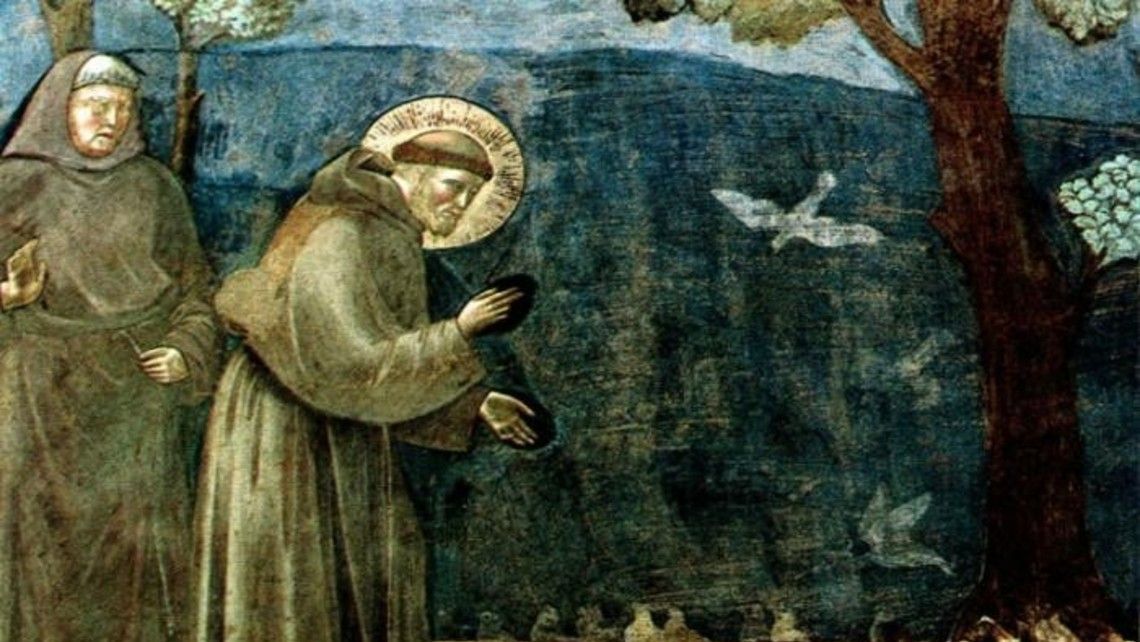
Hello Friends and members, Each year, close to the feast day of St. Francis of Assisi, clergy from the churches of Borrego gather to bless animals people bring to the Christmas Circle. Many bring household pets, dogs, cats, sometimes tortoises and birds. Some even bring pictures of deceased beloved pets or of pets they cannot easily bring in. This year, Fr. David Madsen of St. Barnabas Episcopal, Pastor Mateo of Community United Methodist and Fr. Emilio Magana of St. Richard’s did prayers and blessings for 50-60 animals people brought in. Why do this? Decades ago, some larger churches, New York City’s Cathedral of St. John the Divine, began having blessings of animals on a day close to St. Francis’ feast on October 4. Francis, who died in 1226, was the founder of communities of brothers and sisters and lay people in Tuscany. These groups had a particular focus on assisting the poor, homeless, ill, in short, all people in need. The Borrego Ministers Association (BMA) has exactly the same focus. Francis had the extraordinary vision to see all of the world around us as united to us as family. He spoke of Sister Moon and Brother Sun for example. In his beautiful canticle or song of praise, he bursts into thanksgiving to God for all the wonders of nature around us. Francis also seems to have had an amazing ability to relate to animals. He talked a wolf in the town of Gubbio out of preying upon the shepherds and farmers. It’s reported that when Francis spoke to crowds that had gathered to hear about God’s love for them, that even the birds would sit quietly in the tree branches, seemingly listing to him. One Christmas, Francis got the townspeople to bring animals to a cave where he set up the first ever creche or nativity scene, complete with sheep, oxen and donkeys, there as in the cave and stable where the baby Jesus was born and put, wrapped up, into a feed trough or manger. Supposedly the domestic animals kept him warm with their breath. The UN, the EU and many other international organizations and religious leaders have recognized St. Francis as a holy man and made him a patron saint of the movement to save our environment, and reduce the damaging effects of climate change. People of all faiths and none at all respect Francis as a lover of all the natural world. So it is fitting that our pets are blessed on this day, following his example of love
Every seventh week, from Tuesday through Thursday, Naomi and I find ourselves walking a familiar path—one paved with ancient songs, whispered prayers, and the quiet joy of recognition. The Psalms of Ascent—Psalm 120 through 134—rise up in our Daily Office readings like old friends returning for a visit. And we welcome them with open hearts. These fifteen psalms, traditionally sung by pilgrims journeying to Jerusalem, carry the cadence of movement and longing. They speak of valleys and hills, of danger and deliverance, of community and solitude. Historically, they were likely chanted as travelers ascended toward the Temple, each step a prayer. In the rhythm of the Daily Lectionary, we read the entire book of Psalms every seven weeks. That means each psalm becomes a companion we meet again. Some are challenging, others comforting. But the Psalms of Ascent? They’re ones we look forward to. They’re the ones that feel like a warm jacket on a cool desert morning. There’s something way cool about reading scripture this way—systematically, repetitively, relationally. Over time, verses become familiar not just because we’ve memorized them, but because they’ve memorized us. They know our seasons. They’ve seen us through grief and celebration. And when they return, it’s not just reading, it’s a reunion. So, when Tuesday rolls around in that seventh week, Naomi and I smile. We know what’s coming. We know who’s coming. And we say, “Welcome back, old friend. Let’s enjoy our time together.” I will close with a Psalm of Ascent (Psalm 122) beginning in Hebrew but ending in English. Enjoy. Blessings on your day, Father Dave Madsen
Dear Friends in Christ, The Rev. Canon Jeff Martinhauk is a beloved friend, colleague, and team member here at the diocese. It saddens me greatly to announce that he will be entering medical retirement at the end of February, 2027. Please see his letter below explaining more about his decision to retire. Since Jeff came to work here as our diocesan Chief Financial Officer in 2021, he has been a visionary, steady, faithful guiding influence for growth and financial wellness across our diocese and congregations. Many of you have experienced his patient and calm counsel as he walked you through complex financial, property, or HR situations in your congregations. Diocesan staff, governance committees, and I have relied greatly on his wise and gracious advice. Jeff is devoted to the mission of our diocese. He understands our vision and has been an invaluable partner in our ministry and in creating the strategic plan that is now unfolding. Jeff’s portfolio includes the finances, investments, accounting, human resources, and benefits administration of the diocese, as well as our oversight of property matters in all our congregations. He is also the executive team member responsible for our Mission Real Estate work, which is spearheaded by Jessica Ripper. Jeff has been instrumental in bringing our diocese to a solid and reliable financial footing. He is a true and trusted partner whose kindness, gentle good humor, and careful wisdom is respected and appreciated across our diocese. He is well beloved in his current congregation of St. Andrew’s Pacific Beach, and at St. Paul’s Cathedral, where he served as an associate priest for five years before joining our diocesan staff. Most of all, Jeff is a faithful Christian who has devoted himself to the well-being of the Episcopal Church, our diocese, and our congregations. Our hearts are full as we prepare for Jeff to step down. We will launch a search for his successor soon, and hope to have a new CFO on board early in the new year. I have confidence that God will send the right person to us. But truly, no one can replace Jeff–-he is one of a kind, and very dear to all of us. I give thanks to God for all Jeff has brought to our church. And I ask your prayers for him as he moves into a new phase of his life. In Christ, Bishop Susan Brown Snook ------------------------------------ A Letter from the Rev. Canon Jeff Martinhauk Dear people of the diocese, Some of you already know that two years ago I was diagnosed with a rare neurologic disease called Multiple System Atrophy. It’s a disease similar to, but more aggressive than, Parkinson’s Disease. There is no treatment or cure, and the disease is terminal. I have been lucky to be able to continue serving you so far with only minor impairments in my mobility. My disease has continued to progress, and I now struggle with speaking and typing. Therefore, I have asked the bishop to plan for February 28, 2028, as my last day of work before I go out on long-term disability and medical retirement. I have spent more of my ministry in San Diego than anywhere else, moving here in 2016 to become an associate at the cathedral. I moved to the diocesan office in 2021, where I mixed my pre-ordination career as a CPA with ordained life to become the Treasurer of the diocese and Canon to the Bishop for Finance. I have tried to focus my diocesan ministry on the importance of financial functioning for mission while at the same time being very clear that mission drives finance, not the other way around. It has been tremendously gratifying to meet so many of you and work together on the mission of the church. As this chapter closes and the next one begins, please know you will continue to be in very good hands with our outstanding finance staff in the bishop’s office: Joe, Jessica, Kayla, and Anabel (who are also a pleasure to work with!). My hope is that the bishop selects my successor in time for me to spend a month or so handing things off. I will continue to be available to the bishop after March 1 but do not plan on active ministry beyond that; I plan on continuing to worship at St. Andrews Pacific Beach (and may surprise you some Sundays in other congregations). I give thanks to God that I have been able to serve this diocese. I am not the same priest I was when I arrived here in 2016. With your help, I have grown and deepened so much in faith. Thank you for allowing me to serve you over this past decade, and may God bless you. Blessings, Jeff Martinhauk
Hello Friends and members, Each year, close to the feast day of St. Francis of Assisi, clergy from the churches of Borrego gather to bless animals people bring to the Christmas Circle. Many bring household pets, dogs, cats, sometimes tortoises and birds. Some even bring pictures of deceased beloved pets or of pets they cannot easily bring in. This year, Fr. David Madsen of St. Barnabas Episcopal, Pastor Mateo of Community United Methodist and Fr. Emilio Magana of St. Richard’s did prayers and blessings for 50-60 animals people brought in. Why do this? Decades ago, some larger churches, New York City’s Cathedral of St. John the Divine, began having blessings of animals on a day close to St. Francis’ feast on October 4. Francis, who died in 1226, was the founder of communities of brothers and sisters and lay people in Tuscany. These groups had a particular focus on assisting the poor, homeless, ill, in short, all people in need. The Borrego Ministers Association (BMA) has exactly the same focus. Francis had the extraordinary vision to see all of the world around us as united to us as family. He spoke of Sister Moon and Brother Sun for example. In his beautiful canticle or song of praise, he bursts into thanksgiving to God for all the wonders of nature around us. Francis also seems to have had an amazing ability to relate to animals. He talked a wolf in the town of Gubbio out of preying upon the shepherds and farmers. It’s reported that when Francis spoke to crowds that had gathered to hear about God’s love for them, that even the birds would sit quietly in the tree branches, seemingly listing to him. One Christmas, Francis got the townspeople to bring animals to a cave where he set up the first ever creche or nativity scene, complete with sheep, oxen and donkeys, there as in the cave and stable where the baby Jesus was born and put, wrapped up, into a feed trough or manger. Supposedly the domestic animals kept him warm with their breath. The UN, the EU and many other international organizations and religious leaders have recognized St. Francis as a holy man and made him a patron saint of the movement to save our environment, and reduce the damaging effects of climate change. People of all faiths and none at all respect Francis as a lover of all the natural world. So it is fitting that our pets are blessed on this day, following his example of love