• Home
  • Calendar
  • News & Updates
  • Leadership
  • Our Services
    • Marriage
    • Baptism
    • Borrego Ministers Association
    • Our Labyrinth
    • Useful Resources
  • Videos
  • Contact Us
  • History
760-767-4038
Email us
English English en
Español Español es
  • Home
  • Calendar
  • News & Updates
  • Useful Resources
  • Our Services
  • Baptism
  • Marriage
  • Leadership
  • Videos
  • History
  • Contact Us

Get in touch

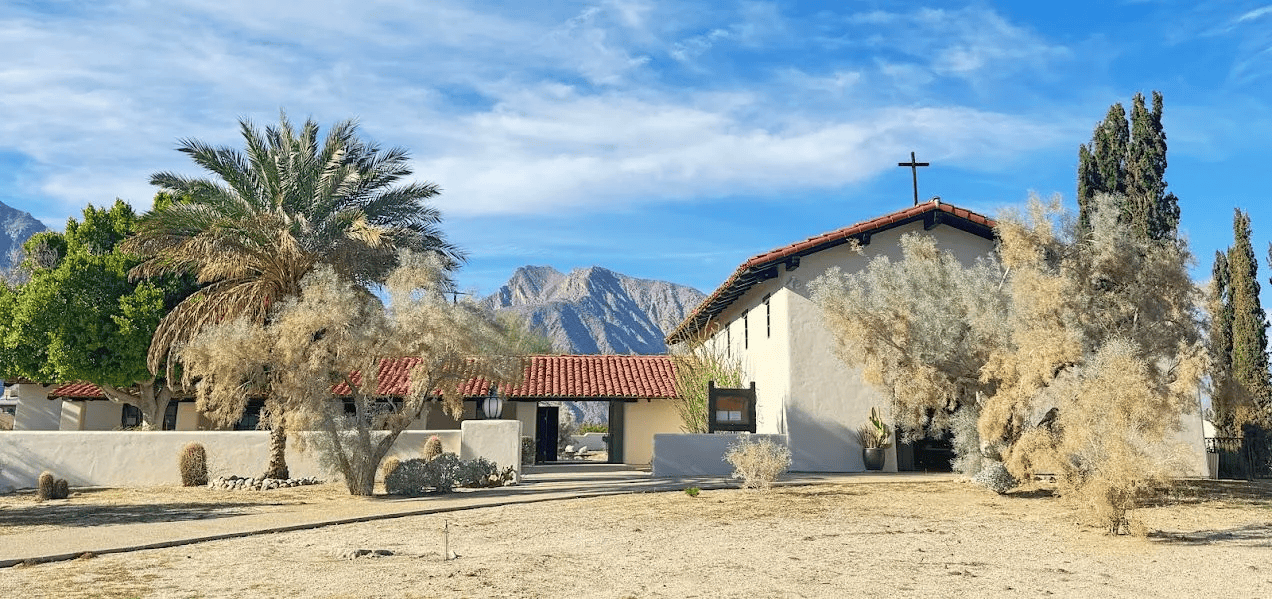
 St. Barnabas Episcopal Church
2680 Country Club Dr
PO Box 691
Borrego Springs CA 92004

760-767-4038

Useful Resources

Give Online

The (Online) Book of Common Prayer


Borrego Springs

  • Anza-Borrego Desert State Park
  • Borrego Springs Chamber & Visitors' Bureau
  • Borrego Springs Performing Arts Center
  • Borrego Film Festival
  • Borrego Art Institute


 Episcopal Church

  • Episcopal Church USA
  • Book of Common Prayer
  • The Lectionary
  • Episcopal LGBT Organization
  • Episcopal Diocese of San Diego
  • Camp Stevens
  • Episcopal Community Services
  • Worldwide Anglican Communion


And More


  • Morning and Evening Prayer
  • Daily Meditations
  • Pronunciations of Biblical words / names
  • Searchable Bibles
  • About Saint Barnabas
  • Aging and Senior Care Assisted Living Resources 

Contact us

Contact us any time

Thank you for contacting us.
We will get back to you as soon as possible.
Oops, there was an error sending your message.
Please try again later.

Our Latest News

What good are they? What are they for, really? Churches.

By Fr. Michael Plekon • August 23, 2026
by Fr. Michael Plekon Finding Faith, Belonging and Purpose Beyond Sunday Services By: Fr Michael Plekon - St. Barnabas Episcopal Church , BMA Co-Chair I am not surprised that in 2026 there are those who ask such questions. My parents were in church with me and my brothers when we were growing up in the 1950s and after. (I am in my later 70s!) I have been involved in the institutional church since I was 13 and went to church prep school, looking toward being a priest. And now I have been a priest for almost 45 years, in several church bodies. Presently I am an assistant priest at St. Barnabas Episcopal Church here in Borrego Springs. When we are back East, I help out at St. James Church, an historic stone church in the old downtown of Danbury CT, once the hat making capital of the US. Years ago when I began ordained ministry alongside being a fulltime professor at The City University of New York, there were a lot of people in church on Sundays, families with kids, as well as older people. Nowadays, it’s mostly my peers, seniors, who I see on Sundays at the service, and also engaged in the community outreach work churches do, from food banks to soup kitchens, thrift shops, and support of safe housing for mothers and children. Many I encounter tell me they grew up in the church. And then grew out of it, for all kinds of reasons. Some found what they heard in sermons repulsive, a lot of negativity and condemnation and rules. In addition, they felt churches were constantly asking for your money, when not scaring you with threats of hell. And did any good come of all those contributions? Some of the most generous and engaged neighbors of mine here have said that they found little to attract them to church. Others simply were too busy, first when they worked and later when retired they were even busier with volunteering, hobbies, golf, travel and more. What’s fascinating is that for quite a few people in Borrego, the food banks, the Community Resource Center and its programs, volunteer work like tutoring and other great things they were doing had become “church” for them. I have published about this, Community as Church, Church as Community, Ministry Matters , and soon to be published Community and Communion. Those who know me even a little know I don’t chase people to church or judge them if they’re not interested. This is the case with the other fine pastors here such as Fr. David Madsen, Pastor Mateo Mamea and Fr. Emilio Mangana, all of whom work with me at the congregations on Church Lane and in the Borrego Ministers Association (BMA). Once, after listening to someone’s honest complaints about religious narrow mindedness and almost hateful intolerance, I replied that he would not find any of that on Church Lane. Rather, anyone will find welcome and acceptance and friendship there. Which brings me back to the question that’s the title here. Those who volunteer, for example, at the monthly St. Barnabas sponsored food bank or the BMA do not all attend services with St. Barnabas, Borrego United Methodist, St. Richard’s or the Lutheran churches or other ones. However, they do identify with the love for the neighbor that all of our food banks and the BMA monthly food coupons express. I can say that we have had people come and sing with our choir at St. Barnabas without joining the church. Same is true for those who come out to the choirs assembled for the BMA Thanksgiving and Easter Sunrise services and the Christmas Cantata when it’s performed. I know that people come to all of our Church Lane congregations because they find there real community and belonging, others who have compassion and are happy to share their resources for those who are in need. This especially happens through the BMA, but as well through the Community Resource Center, the Soroptimists, BASIC, Rotary, the BAI, Valley Endowment Fund and Art Guild, among our wonderful nonprofits. It’s true that when you meet someone who gives of themselves and their resources in any of these groups and the churches, you will see them again and again across the activities of these nonprofits. I hear someone reading this saying, “Ah, but don’t you have creeds and teachings, readings from the scripture and holy communion and other specifically religious activities in church?” Well of course the churches do. These are ancient ways of expressing faith, praying for those who are ill, in need, ways of celebrating births, marriages and deaths as well.” No one is interrogated however on their belief or on anything else in our communities of faith. Rather, everyone is a sister or brother to be loved and supported. Back during lockdown, zoom classes I offered were attended by people who otherwise had little if anything to do with church. What good are they, churches, what are they for? I believe if you’ve followed what I ‘ve said here, you could say they are for building up and sustaining community, for doing good, for the good of the entire town. And God, for whom these communities exist would agree. Authorial Interview: Fr. Michael Plekon Michael Plekon / Pastors, Their Life and Work Today Saints As They Really Are

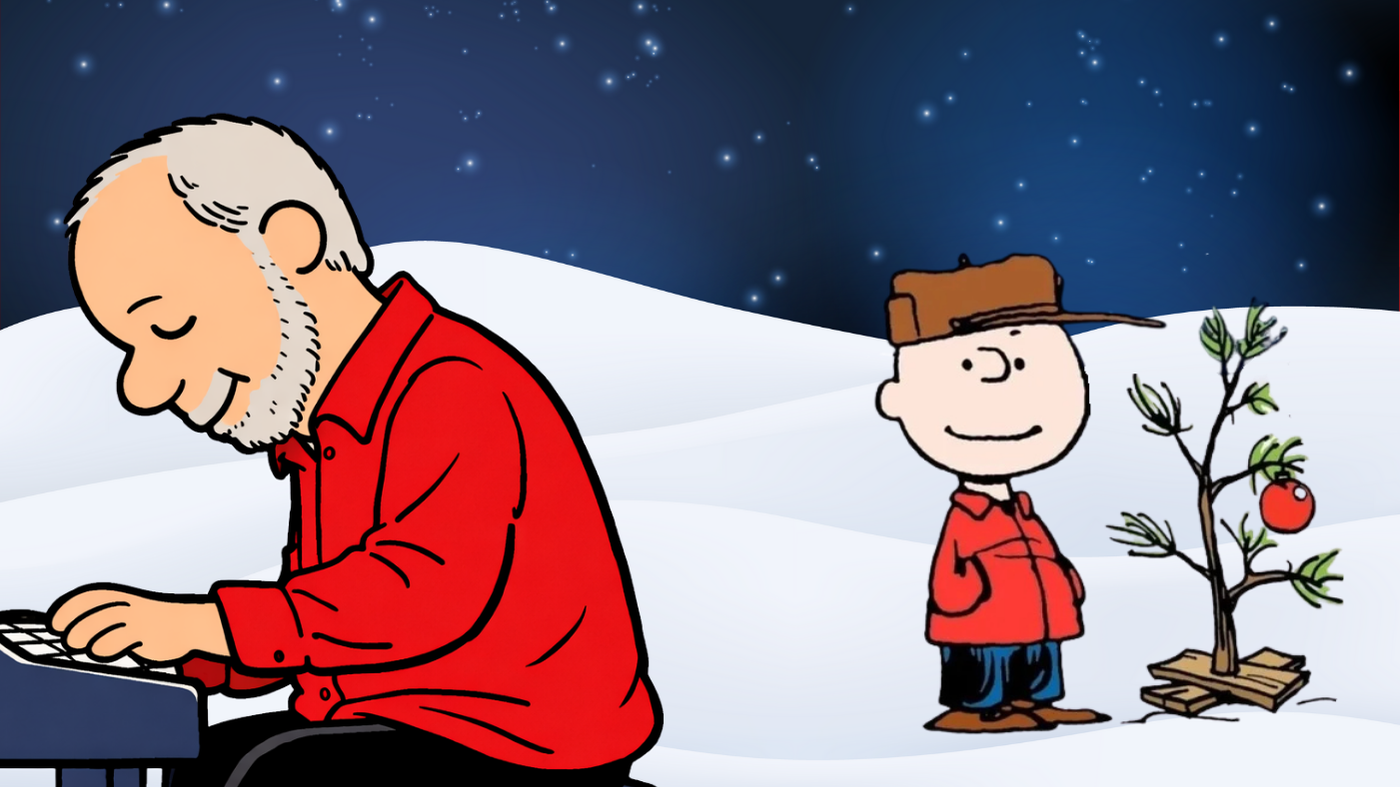
A Charlie Brown Christmas Piano Concert

August 21, 2026
A Community Concert Marking 60 Years of a Holiday Classic

Between the Wings: The Nearness of God

By Fr. David Madsen • August 11, 2026
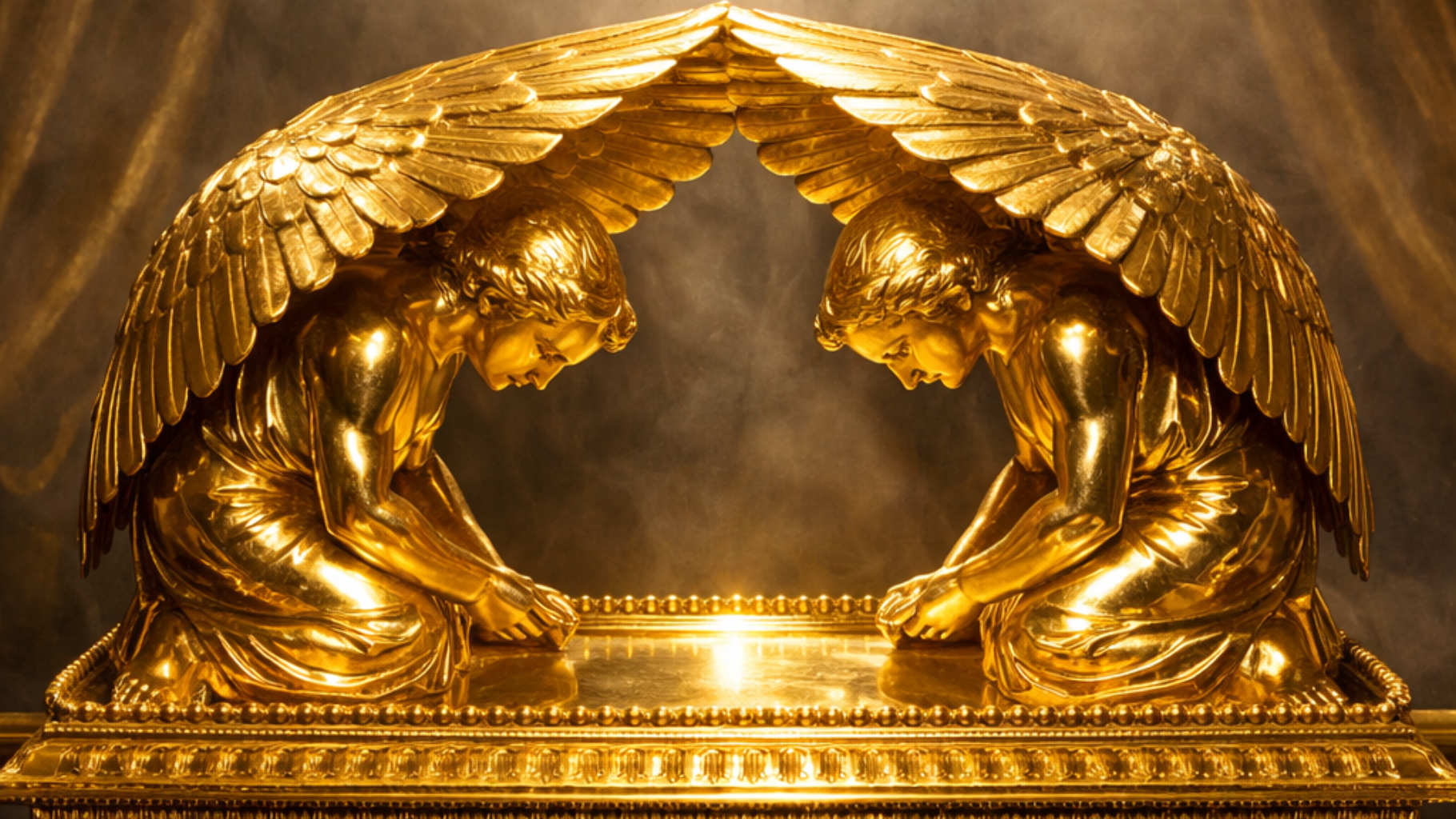
God’s presence has always been more than an idea on a page. Scripture keeps pointing us back to that truth. In the wilderness, Israel learned to look toward the mercy seat, that small space between the wings of the cherubim, because that was where God chose to dwell. Not in the gold, not in the symbols, but in the living presence that met them there. The psalmists return to this image again and again. They cry out to the One who is “enthroned between the cherubim,” not because they believed God was trapped in a box, but because they trusted that God was real, near, and attentive. The mercy seat became a reminder: God is not far off. God leans toward us. That same presence moves even closer. Jesus becomes the meeting place, the mercy seat in flesh and blood. And after his resurrection, the Holy Spirit takes up residence not in a tent or a temple, but in human hearts. The presence that once rested between the cherubim now rests within us. We don’t always feel it. Some days we’re distracted, tired, or simply unaware. But the presence remains, steady, patient, near. Scripture doesn’t replace that presence; it points us toward it, the way the cherubim once did. It reminds us that God is not an idea to study but a presence to encounter. And so we live our days in the desert, in the quiet, in the ordinary, the same God who met Israel in the wilderness meets us still.  I leave you with a song called Deep Peace from Libera, the boys’ choir from South London. May its blessing rest lightly on your spirit and carry you gently into whatever this day holds.

Living Into the Unknown (Past Present and Future)

By Fr Dave Madsen • August 2, 2026
The way I write and think today is different than it was years ago. I don’t claim it is better — only more seasoned, shaped by experience and tempered by time. Yet one thing has remained constant: my appreciation for the unknown. Chronos time — the measurable, scheduled flow of days — has shaped my views of the church, community, and world. Seminary and ongoing study have given me a quantitative framework for ministry. But when Chronos becomes our only lens, it can drown out Kairos: those opportune, grace-filled moments when God breaks through in ways that cannot be planned or measured. God speaks in both kinds of time — in the steady rhythm of our days and in the sudden moments of significance. But I have always felt drawn to the God who teaches through surprise, the God who invites us to live into questions rather than cling to answers. I consider myself a Christian mystic, even though my life does not always reflect that claim as faithfully as I wish. Still, I recognize those Kairos moments when God reveals something beyond my comprehension — moments that remind me of the beauty of mystery and the joy of resting in a presence that exceeds understanding. If I can say one thing with confidence, it is this: God loves you — fully, fiercely, and without condition. Not because of what you have done, not because of how you feel about yourself, and not because of who you may become. God loves you in this present moment, exactly as you are. May we learn to trust the God who meets us in both Chronos and Kairos — and may we find peace in the holy unknown, where God continues to speak. I will close this short message with a song by John Michael Talbot, T he Spirit of God is Upon Me Father Dave+

Spiritual Practices

By Fr. David Madsen • July 22, 2026
by Fr. David Madsen Spiritual habits rarely begin easily. Wisdom has said this for centuries; the beginning of discipline is always the hardest step (cf. Proverbs 1:5 ). And anyone who has tried to build a spiritual practice knows the truth of another old insight: habits are fragile at first, but the longer you keep them, the harder they are to break (cf. Meister Eckhart thoughts about starting and keeping spiritual practice ) We live in a world overflowing with books, blogs, and guides on prayer, meditation, and spiritual rhythms. But where does someone actually begin? I’ve learned that the best place is not a book, it’s a person. Think of someone whose life carries the quiet weight of prayer. If you have a spiritual director, or a trusted guide, ask them. If there is a pastor or spiritual leader whose rule of life seems rooted in practice, ask for a conversation. In my humble opinion, there is no “right” or “wrong” way to pray. Prayer is communion with God, sometimes with words, sometimes without. Jesus himself makes this clear in the story of the Pharisee and the tax collector ( Luke 18:9–14 ). One man stands tall, proud of his religious performance. The other sits in the corner, beating his chest, whispering, “God, be merciful to me.” And Jesus says it plainly: that man, the one crying out for help, is the prayer God listens to. Over the last thirty years, I’ve tried many practices. Some stayed with me, some faded, but one has carried me since before seminary. Yes, there are days I miss, but I try to keep those to a minimum. Experience has taught me that the longer you keep a spiritual practice, the more it keeps you. So if you feel a desire rising in you to begin a spiritual practice, don’t dismiss it. You didn’t invent that longing. I believe the Holy Spirit is already stirring in your heart. That stirring itself is prayer, God’s own prayer in you, drawing you toward communion. And that is where every spiritual habit begins. I will close with a song by Mary Chapin Carpenter, I have a need for solitude.

“My Country, ’Tis of Thee”: America at 250

By Fr. Michael Plekon • July 4, 2026
by Fr. Michael Plekon You probably know that July 4 was NOT the actual day of the birth of America as an independent nation. The Declaration of Independence was presented on July 1, 1776 and signed the next day. President John Adams always held either of those two dates should be celebrated as the founding date. Be that as it may, July 4 became the birth date and here we are, 250 years later. You have heard many thoughts about the 250th anniversary happening at this moment in our history. The presidentially supported “official” celebrations on the Mall in Washington have been underwhelming. Some have chosen to talk more about their special issues, and grievances. Complaining has become part of the regular public discourse in the US. “God bless the USA” is taken as kind of national anthem for its glorification of our land without the slightest reservation or notice of what’s been done poorly. You can only patriotically praise the country, though the loudest promotors have a list of things about which they are very angry. In the more distant past, parades, tall ships, speeches and music made for upbeat celebrations. With flags and red, white and blue bunting on the streets and buildings, there was a clear positive, patriotic feeling to the Fourth. Most of us remember barbecues and picnics, gatherings of families and neighbors, and of course the fireworks. A few have urged us to take a moment to reflect on what an amazing experiment this America has been. In the spring, PBS broadcast Ken Burns’ excellent documentary series on the Revolution, where it came from, how it led to a deadly war, and finished with the Continental Congress at last agreeing to a Declaration of Independence and Bill of Rights for a new nation. Burns’ series was a revelation, even for those of us who thought we knew the history. For me, the isolation and insulation of the colonies from each other, their ignorance of even their nearest neighboring colony, the sheer diversity of religious, political and economic ways of life made it exceedingly difficult for the lot of them to come together and take action. Many in the colonies were loyalists to the King and could not imagine not being His Majesty’s subjects, citizens of a great nation with great history of law, culture and belief in human rights (for some, mainly white males). Yet, convinced there could be a future as a free land, they overcame suspicions, prejudice, and sheer ignorance of each other to start behaving as a community, a nation united “in the pursuit of life, liberty and the pursuit of happiness,” as the Declaration puts it. The ability to live free of distant rulers, and to be able to determine their own laws and form of government were central but not the only truths that they found self-evident. They would be appalled at some of what is said and done in America now. As former British citizens they put a great value on being a nation of laws, not political factions dominated by a leader or grievances and issues. They owned slaves, had profound religious and cultural prejudices, this cannot be forgotten. There was little space for you in 1776 America if you were Catholic, Jewish, Muslim, indigenous people or persons of color, or women for that matter. Despite settlers from Sweden, France, Germany, the Netherlands, and the presence of Spaniards in New Spain, those who represented the colonies were all male, white, and mostly Protestant. But even here, while most came from Anglican/Episcopal Congregational, Presbyterian and Quaker churches, some were outside traditional Christianity, like Jefferson, Franklin and Adams. A few were identified with churches but rarely if ever attended. So much for the claim that America was founded as a Christian nation. The 56 delegates who signed would have said no to this. The closer one looks at those who took the step to declare independence and start a new government and country, the more one sees discernment and commitment to change. Yet even after this groundbreaking start, there would be deep disagreements, as the arguments among them—Jefferson, Hamilton, Madison, Franklin-- and the demands of fighting a war ensued. Put simply, the founders were a mix of great ideals, contentious disagreement, and sometimes petty prejudices. This would prove true later when the country split in the Civil War. It continues to this day, even though we have come together and done the seemingly impossible, as in opposed the Axis of Germany and Japan in WWII. Going forward, we can be encouraged by the founders, for even in their often messy humanity, more often the good, the beautiful and the true won out. They were able to identify the protections, rights and necessary checks and balances for a national government as well as find the local state versions of the same. So, in our brief moment of celebration now, we should be grateful for what they were able to accomplish, but as we move forward, we need to hold on to the best of what they stood for, no matter how other voices may drone these out. We have always been a diverse people, a nation of immigrants, a community that displays many religious, cultural and social differences. But there is something that can hold us together as Americans, something more than apple pie and, baseball both of which I dearly love. Happy 250th birthday America, happy Fourth.

HOT DOG DAYS OF SUMMER

By Fr. David Madsen • July 2, 2026
by Fr. David Madsen You’ve heard the phrase “the dog days of summer”, those heavy, hot weeks of July and August when even the dogs seem to give up and flop onto the nearest patch of shade. But the name actually comes from Sirius, the bright “dog star” in Canis Major, rising with the sun and signaling the most sweltering stretch of the season.  Why do I love these dog days? Yes, the desert heat can be fierce, but many of you know this is when I slip out early in the morning or later in the evening to work on sermons and articles. The desert, what Scripture often calls the wilderness, has always been a place of rest, prayer, and clarity. Jesus sought it out when He needed quiet, and He encouraged His followers to do the same. I suppose I’m guilty of following His lead. Most Mondays, and many Saturdays, I find a quiet desert spot, or sometimes the mountains, to look at Sunday’s message. Out there, the words open up. The silence helps. It’s become my oasis, my year-round rhythm, not just a summer habit. Naomi can testify to that. As July and August unfold and summer leans toward autumn’s gold, I wish you rest, renewal, and maybe a quiet oasis of your own. Father Dave

Water bound: Walking with Each Other Through the Hard Places

June 19, 2026
Hello Members and Friends, We all hit potholes in life — the kind that drop us suddenly into emptiness with no clear way out. I went there, and I know many of you have too. In those moments, our plans can feel dead in the water. Rearranging the future seems as impossible as trying to tune in a television stuck on static. Everything feels suspended, uncertain, out of reach.  As a leader in the church and the community, I carry a responsibility to walk beside people in those hard places. Some struggles pass quickly, but others stay. Over the years I’ve walked with folks — mostly older, but some younger — through their final months, weeks, and days. In those seasons, worldviews shift. Plans dissolve. The future they imagined simply falls away. My role is to be present: to bring the love of family and friends when they’re near, and to be the friend when no one else is left. Some want to hear about hope beyond this life; some don’t. Either way, the ministry is the same — to walk besides, offering comfort, to stay. Many of you have faced life-changing potholes that weren’t life-ending but still left you shaken. In those moments, it’s easy to feel lost. But there is a way forward, even if it takes time. And I believe it’s our shared calling — mine as a pastor, yours as neighbors and friends — to show up for one another. Presence is often the greatest gift we can offer. Sometimes the only one. This isn’t a message of gloom. It’s a message of honesty — and hope. Hope for better days when they come and hope for courage and companionship when they don’t. When life leaves us water bound — or even shipwrecked — the way ahead can vanish. Plans fall apart, and we’re left holding whatever pieces still float. I invite you to hear Waterbound as a companion for those moments when you feel cut off or overwhelmed. Listen: Waterbound” – Dirk Powell & The Transatlantic Musicians (Transatlantic Sessions) Father Dave+
Show More

Contact Us

Thank you for signing up!


Oops, there was an error sending your message.
Please try again later.
Give Online

St. Barnabas Episcopal Church

2680 Country Club Dr 

PO Box 691, Borrego Springs CA 92004

760-767-4038


Info@stbarnabasborregosprings.com

© 2026 

All Rights Reserved | St. Barnabas Episcopal Church