


Hello Friends & Members, It was the summer of 1971. I was 19, working at a youth ministry called Teen Challenge in Denver, Colorado, getting ready to start Bible school in the fall. The Mission Pastor asked what I wanted to do that summer. And, being young and perhaps a little too confident, I said, “I want to work the streets from 10 PM to 4 AM.” He looked at me the way a pastor looks at a teenager who has just said something that will give him heartburn. But he was a good friend of my father’s from Bible college, so he agreed — probably against his better judgment. One early morning, near the end of my shift, I met a young runaway boy — maybe fourteen. It was clear, even to a ‘teenage evangelist’, that what he needed wasn’t a prayer or a sermon. He was hungry. So I asked if I could buy him a burger at the 24‑hour diner on the corner. We sat down. I ordered him a hamburger and a glass of milk. And when the food arrived, this young man — tough, street‑worn, trying so hard to be older than he was — he just broke. He started crying. Not polite tears. Not “I have something in my eye” tears. He wept. The food, the warmth, the simple fact that someone cared — it undid him. I can still see it like it was yesterday: the small diner, the Formica table, the boy hunched over his plate, the waiter pretending not to stare, the clatter of the kitchen, the quiet holiness of that moment. It was an epiphany. Something shifted in me. I understood what God was showing me and doing in me. And I knew — with a clarity that has never left me — that my life would always be tied to people on the margins. That God would keep placing me at tables like that one, with people who needed compassion more than judgment, presence more than perfection. Wherever I’ve gone, that moment has gone with me. Emmanuel — God with us — is not an idea. It’s a table in a diner at 4 AM. It’s a lonely, hungry teenager and a hamburger. It’s the quiet realization that God shows up in the places we don’t expect, through the people we don’t expect, in the hours we don’t expect. I close with a song by Carole King, You Got a Friend. Blessings on your day, Father Dave+
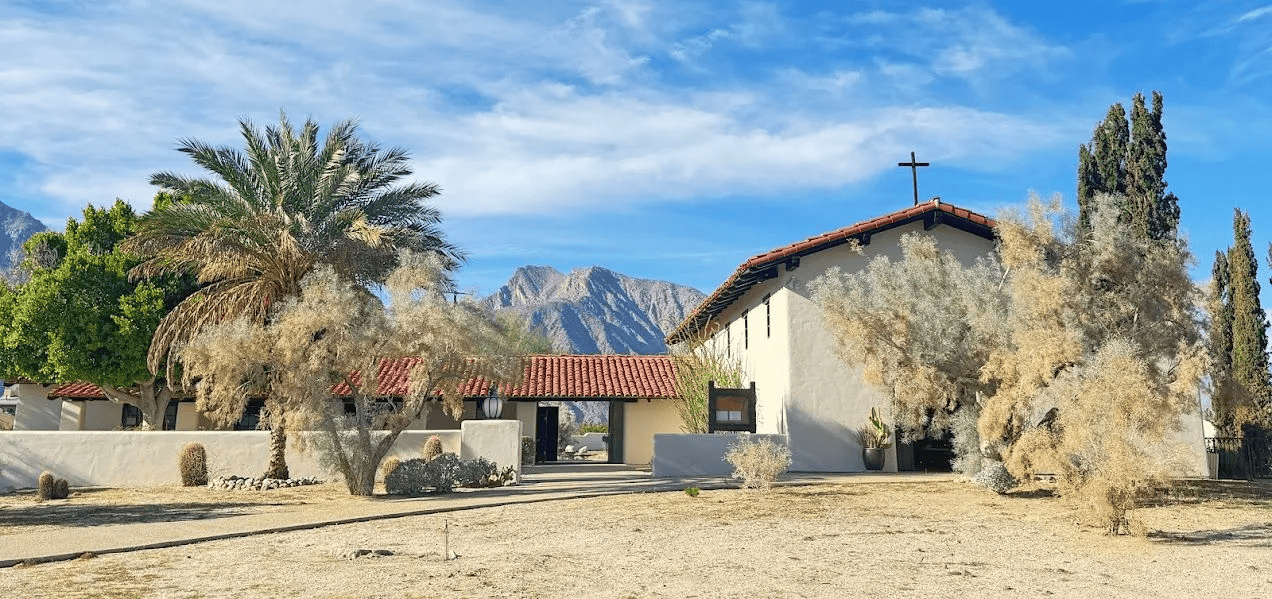
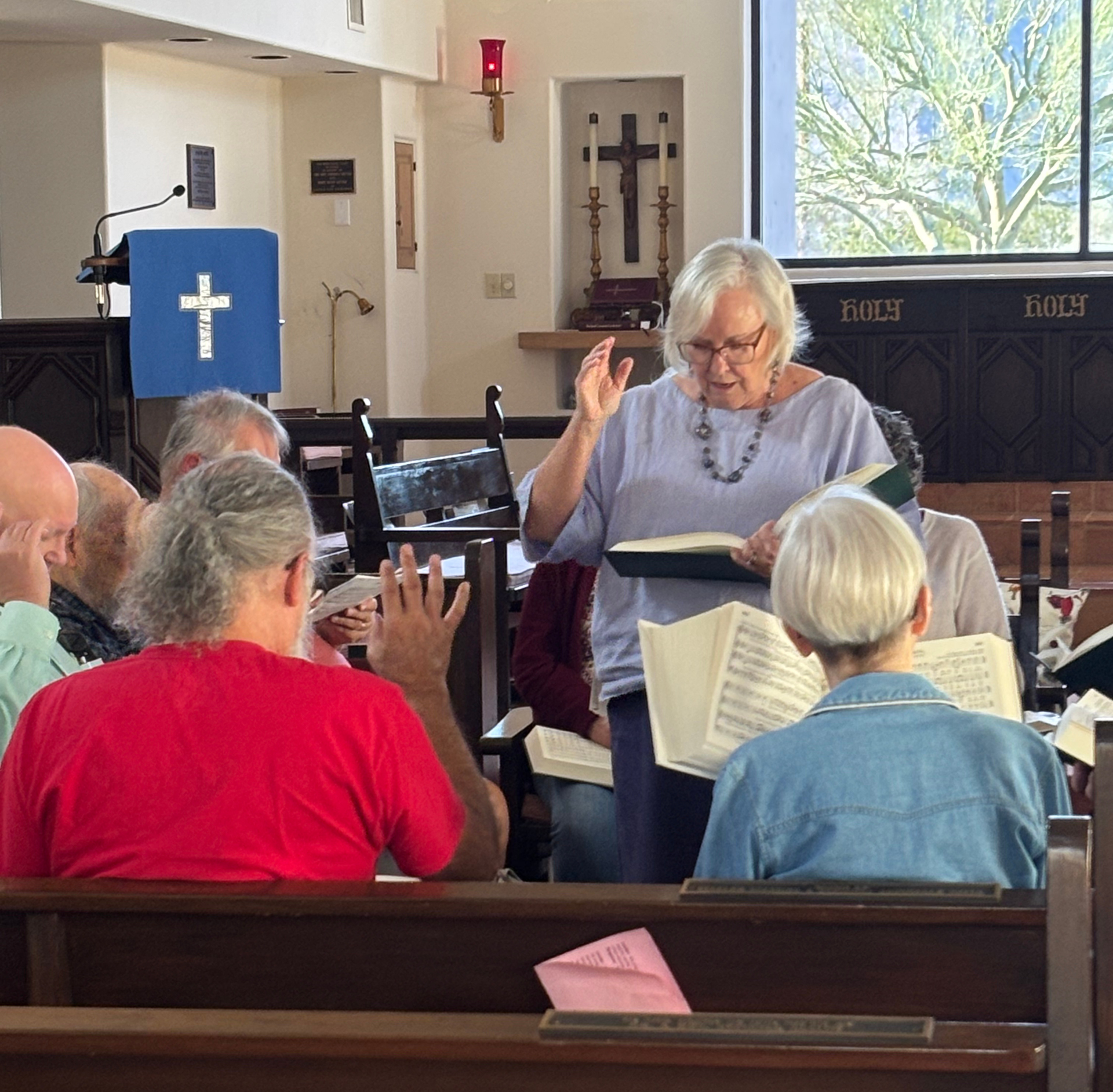
Sunday, November 29, 2026 | 2:00–4:00 p.m. Location: St. Barnabas Episcopal Church, 2680 Country Club Drive, Borrego Springs, CA 92004 Shape Note singing returned to Borrego Springs for the second time, building on the enthusiasm from last year’s gathering at the Borrego Springs Library. This year, community members gathered at St. Barnabas Episcopal Church, where the acoustics allowed the music to resonate throughout the space. Organized by Jeanne Plekon, the event opened with an introduction to Shape Note singing, covering its history, structure, and the way shaped notes (Fa, Sol, La, Mi) guide participants. Following the introduction, members of the San Diego Fasola Singers led the singing and welcomed community members to participate. Shape Note, also known as Sacred Harp, is a participatory a cappella tradition in which singers stand around a hollow square, with each side representing a different vocal part. No musical training is required, and newcomers are encouraged to join in. The result was a resonant, joyful sound that filled the church and created a memorable experience for returning singers and first-time participants alike. The gathering offered Borrego Springs another opportunity to experience this historic American musical tradition and connect with others through music in a welcoming community setting.
Hello Friends & Members, It was the summer of 1971. I was 19, working at a youth ministry called Teen Challenge in Denver, Colorado, getting ready to start Bible school in the fall. The Mission Pastor asked what I wanted to do that summer. And, being young and perhaps a little too confident, I said, “I want to work the streets from 10 PM to 4 AM.” He looked at me the way a pastor looks at a teenager who has just said something that will give him heartburn. But he was a good friend of my father’s from Bible college, so he agreed — probably against his better judgment. One early morning, near the end of my shift, I met a young runaway boy — maybe fourteen. It was clear, even to a ‘teenage evangelist’, that what he needed wasn’t a prayer or a sermon. He was hungry. So I asked if I could buy him a burger at the 24‑hour diner on the corner. We sat down. I ordered him a hamburger and a glass of milk. And when the food arrived, this young man — tough, street‑worn, trying so hard to be older than he was — he just broke. He started crying. Not polite tears. Not “I have something in my eye” tears. He wept. The food, the warmth, the simple fact that someone cared — it undid him. I can still see it like it was yesterday: the small diner, the Formica table, the boy hunched over his plate, the waiter pretending not to stare, the clatter of the kitchen, the quiet holiness of that moment. It was an epiphany. Something shifted in me. I understood what God was showing me and doing in me. And I knew — with a clarity that has never left me — that my life would always be tied to people on the margins. That God would keep placing me at tables like that one, with people who needed compassion more than judgment, presence more than perfection. Wherever I’ve gone, that moment has gone with me. Emmanuel — God with us — is not an idea. It’s a table in a diner at 4 AM. It’s a lonely, hungry teenager and a hamburger. It’s the quiet realization that God shows up in the places we don’t expect, through the people we don’t expect, in the hours we don’t expect. I close with a song by Carole King, You Got a Friend. Blessings on your day, Father Dave+
Sunday, November 29, 2026 | 2:00–4:00 p.m. Location: St. Barnabas Episcopal Church, 2680 Country Club Drive, Borrego Springs, CA 92004 Shape Note singing returned to Borrego Springs for the second time, building on the enthusiasm from last year’s gathering at the Borrego Springs Library. This year, community members gathered at St. Barnabas Episcopal Church, where the acoustics allowed the music to resonate throughout the space. Organized by Jeanne Plekon, the event opened with an introduction to Shape Note singing, covering its history, structure, and the way shaped notes (Fa, Sol, La, Mi) guide participants. Following the introduction, members of the San Diego Fasola Singers led the singing and welcomed community members to participate. Shape Note, also known as Sacred Harp, is a participatory a cappella tradition in which singers stand around a hollow square, with each side representing a different vocal part. No musical training is required, and newcomers are encouraged to join in. The result was a resonant, joyful sound that filled the church and created a memorable experience for returning singers and first-time participants alike. The gathering offered Borrego Springs another opportunity to experience this historic American musical tradition and connect with others through music in a welcoming community setting.