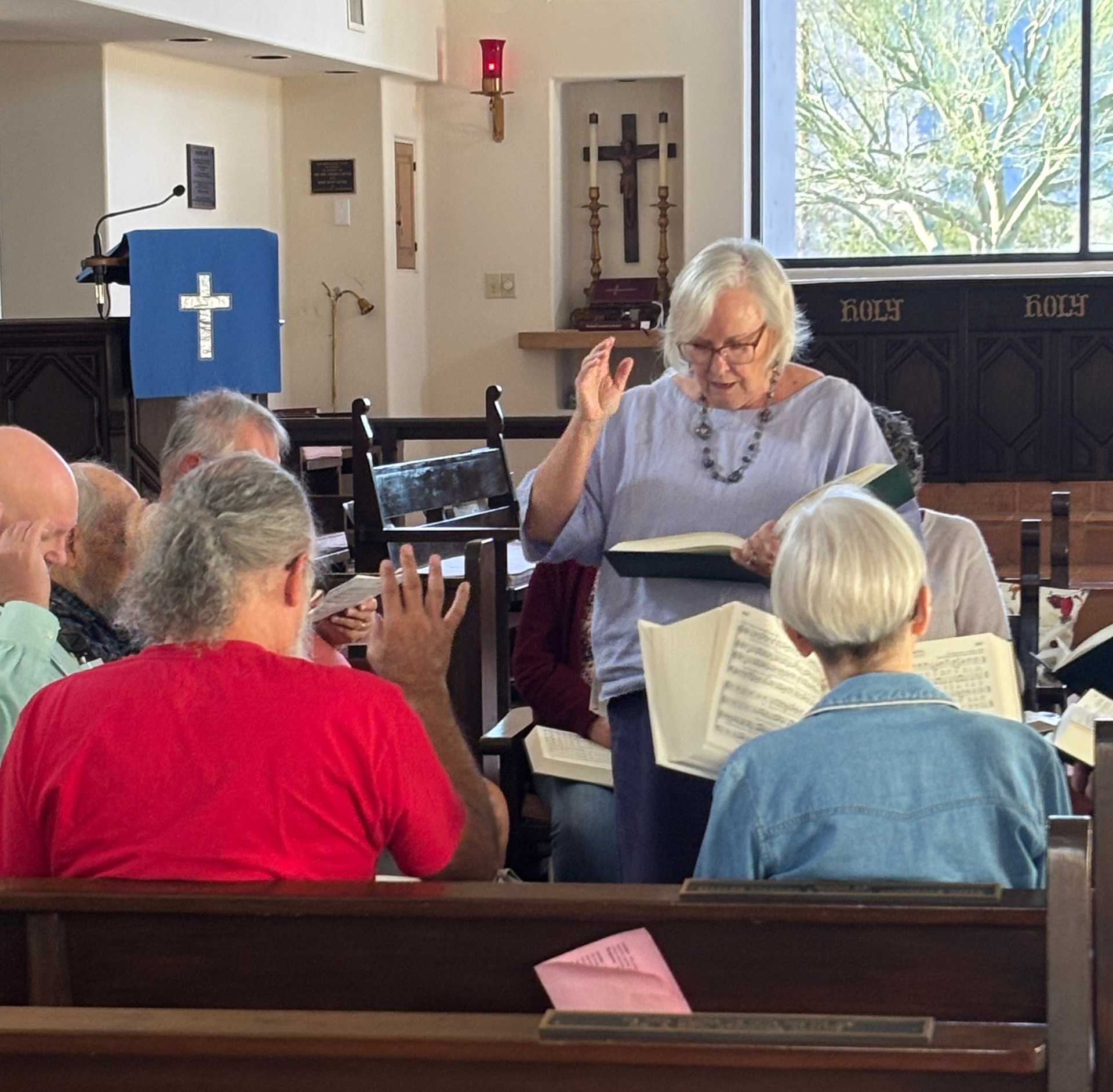
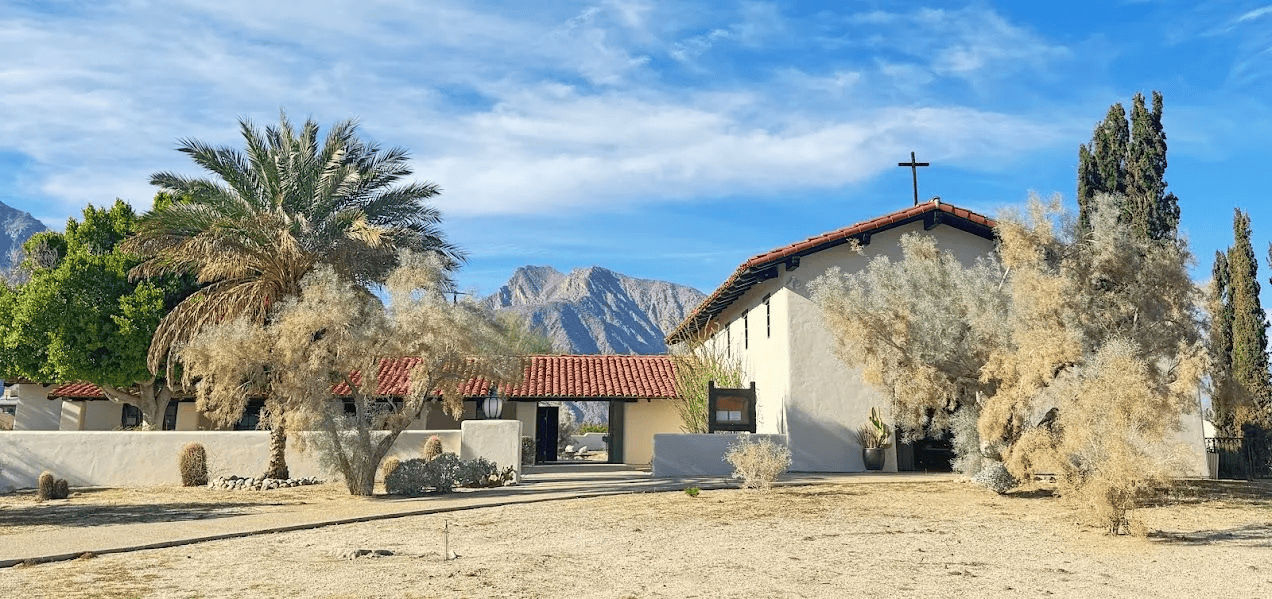
Sunday, November 29, 2026 | 2:00–4:00 p.m. Location: St. Barnabas Episcopal Church, 2680 Country Club Drive, Borrego Springs, CA 92004 Shape Note singing returned to Borrego Springs for the second time, building on the enthusiasm from last year’s gathering at the Borrego Springs Library. This year, community members gathered at St. Barnabas Episcopal Church, where the acoustics allowed the music to resonate throughout the space. Organized by Jeanne Plekon, the event opened with an introduction to Shape Note singing, covering its history, structure, and the way shaped notes (Fa, Sol, La, Mi) guide participants. Following the introduction, members of the San Diego Fasola Singers led the singing and welcomed community members to participate. Shape Note, also known as Sacred Harp, is a participatory a cappella tradition in which singers stand around a hollow square, with each side representing a different vocal part. No musical training is required, and newcomers are encouraged to join in. The result was a resonant, joyful sound that filled the church and created a memorable experience for returning singers and first-time participants alike. The gathering offered Borrego Springs another opportunity to experience this historic American musical tradition and connect with others through music in a welcoming community setting.
Every seventh week, from Tuesday through Thursday, Naomi and I find ourselves walking a familiar path—one paved with ancient songs, whispered prayers, and the quiet joy of recognition. The Psalms of Ascent—Psalm 120 through 134—rise up in our Daily Office readings like old friends returning for a visit. And we welcome them with open hearts. These fifteen psalms, traditionally sung by pilgrims journeying to Jerusalem, carry the cadence of movement and longing. They speak of valleys and hills, of danger and deliverance, of community and solitude. Historically, they were likely chanted as travelers ascended toward the Temple, each step a prayer. In the rhythm of the Daily Lectionary, we read the entire book of Psalms every seven weeks. That means each psalm becomes a companion we meet again. Some are challenging, others comforting. But the Psalms of Ascent? They’re ones we look forward to. They’re the ones that feel like a warm jacket on a cool desert morning. There’s something way cool about reading scripture this way—systematically, repetitively, relationally. Over time, verses become familiar not just because we’ve memorized them, but because they’ve memorized us. They know our seasons. They’ve seen us through grief and celebration. And when they return, it’s not just reading, it’s a reunion. So, when Tuesday rolls around in that seventh week, Naomi and I smile. We know what’s coming. We know who’s coming. And we say, “Welcome back, old friend. Let’s enjoy our time together.” I will close with a Psalm of Ascent (Psalm 122) beginning in Hebrew but ending in English. Enjoy. Blessings on your day, Father Dave Madsen
Sunday, November 29, 2026 | 2:00–4:00 p.m. Location: St. Barnabas Episcopal Church, 2680 Country Club Drive, Borrego Springs, CA 92004 Shape Note singing returned to Borrego Springs for the second time, building on the enthusiasm from last year’s gathering at the Borrego Springs Library. This year, community members gathered at St. Barnabas Episcopal Church, where the acoustics allowed the music to resonate throughout the space. Organized by Jeanne Plekon, the event opened with an introduction to Shape Note singing, covering its history, structure, and the way shaped notes (Fa, Sol, La, Mi) guide participants. Following the introduction, members of the San Diego Fasola Singers led the singing and welcomed community members to participate. Shape Note, also known as Sacred Harp, is a participatory a cappella tradition in which singers stand around a hollow square, with each side representing a different vocal part. No musical training is required, and newcomers are encouraged to join in. The result was a resonant, joyful sound that filled the church and created a memorable experience for returning singers and first-time participants alike. The gathering offered Borrego Springs another opportunity to experience this historic American musical tradition and connect with others through music in a welcoming community setting.
Every seventh week, from Tuesday through Thursday, Naomi and I find ourselves walking a familiar path—one paved with ancient songs, whispered prayers, and the quiet joy of recognition. The Psalms of Ascent—Psalm 120 through 134—rise up in our Daily Office readings like old friends returning for a visit. And we welcome them with open hearts. These fifteen psalms, traditionally sung by pilgrims journeying to Jerusalem, carry the cadence of movement and longing. They speak of valleys and hills, of danger and deliverance, of community and solitude. Historically, they were likely chanted as travelers ascended toward the Temple, each step a prayer. In the rhythm of the Daily Lectionary, we read the entire book of Psalms every seven weeks. That means each psalm becomes a companion we meet again. Some are challenging, others comforting. But the Psalms of Ascent? They’re ones we look forward to. They’re the ones that feel like a warm jacket on a cool desert morning. There’s something way cool about reading scripture this way—systematically, repetitively, relationally. Over time, verses become familiar not just because we’ve memorized them, but because they’ve memorized us. They know our seasons. They’ve seen us through grief and celebration. And when they return, it’s not just reading, it’s a reunion. So, when Tuesday rolls around in that seventh week, Naomi and I smile. We know what’s coming. We know who’s coming. And we say, “Welcome back, old friend. Let’s enjoy our time together.” I will close with a Psalm of Ascent (Psalm 122) beginning in Hebrew but ending in English. Enjoy. Blessings on your day, Father Dave Madsen